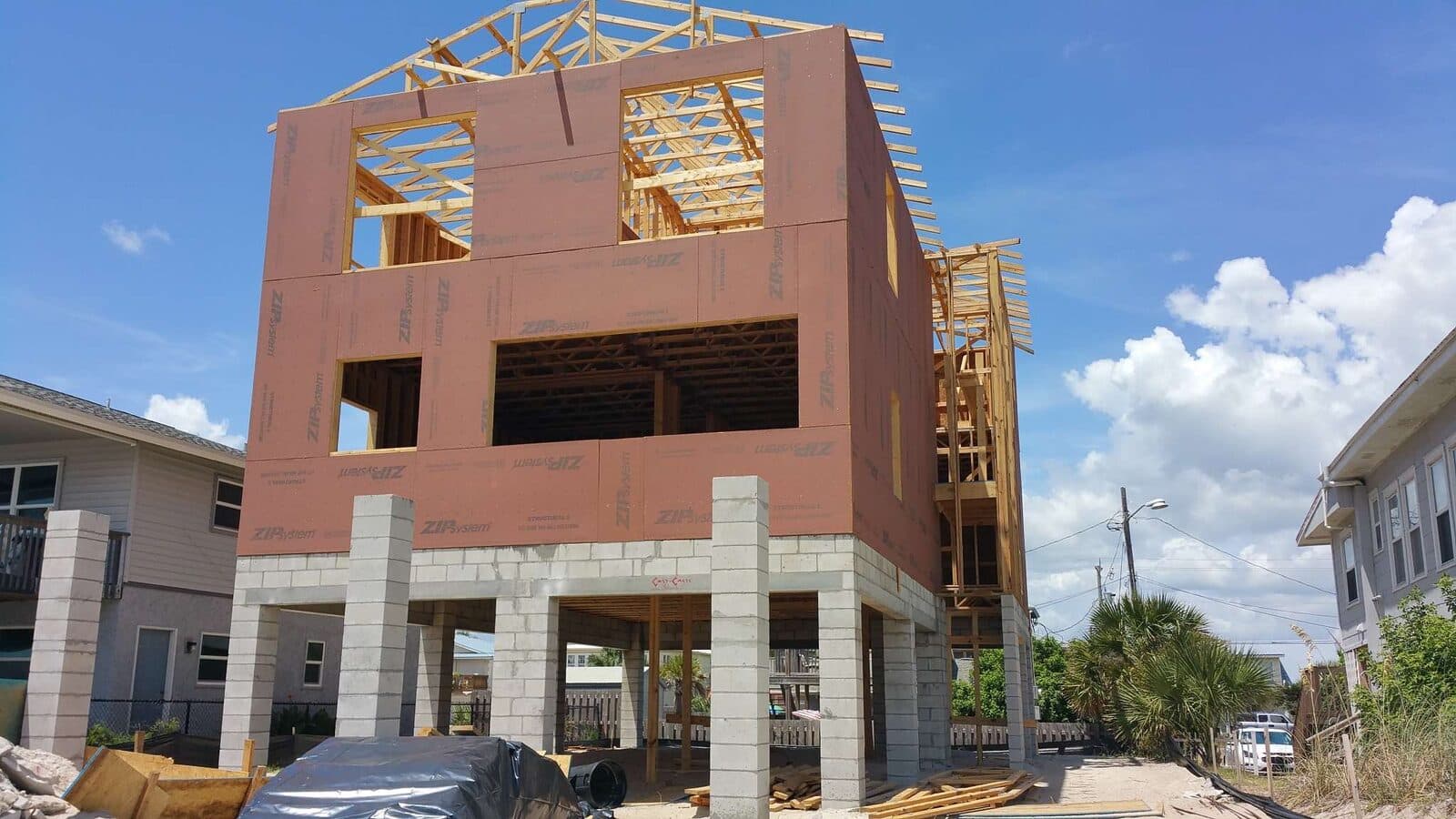
A lot of the homes I inspect around Yulee and the A1A corridor are brand new, and buyers often ask me the same question: "It's new and the county inspected it, so why do I need you?" The honest answer is that a house is built by a lot of different crews, on a schedule, and each crew covers up the work of the one before. The county's code inspector checks the minimum the code requires. My job is to check what you are paying for.
There are three points in a build where an independent inspection is most useful.
1. Pre-pour (foundation slab)
Before the concrete goes in, everything that will end up under or inside the slab is still visible. Once it is poured, it is gone for good. This inspection is about catching problems with the slab preparation while they are still a quick fix instead of a jackhammer job.
2. Pre-drywall
This is the one I would never skip. The house is "dried in": the roof is on, the windows are in, and the plumbing, electrical and air conditioning are roughed in, but nothing is hidden behind drywall yet. I compare what was built with your engineering plans:
- Framing members are the right size and spacing
- Tie-downs, straps and anchors connect the roof to the walls and the walls to the foundation
- Sheathing and shear walls are nailed to the pattern on the plans
- Plumbing and wiring are protected where they pass through framing
- The weather barrier and flashing around windows and doors are lapped correctly
- The roof covering, underlayment and flashing are installed properly
It is common for most of what I write up at this stage to be things the code inspection did not look at, because a code inspector is not comparing the structure to your particular plans. I once inspected a new home that had passed its code inspections with no hurricane clips in the garage.
3. Final, before closing
About a week before closing, the house is finished and I do a full inspection, much like any home inspection: roof, attic and insulation, plumbing, electrical, air conditioning, windows, doors and the exterior. Book it a day or two before the builder's walk-through, so you can bring the report to that meeting and go through it with your builder at the house.
The problem I find most often in new homes is an air conditioning system that is low on refrigerant, usually because the indoor and outdoor units are far apart and the system was not charged for the longer line. Thin or missing attic insulation, outlets with no power and fixtures that do not work turn up in "finished" homes too.
And one more: the 1-year warranty inspection
Some problems only show up after you have lived in the house: cracked sealant, settling, a slow leak. Book a full inspection in the last month or two of your builder's warranty, and send the builder one clear list while they are still responsible for fixing it.
Questions about your build? Read more about new construction inspections, the 1-year builder warranty inspection, or call or text me at 904-321-9121.